World’s Best Drift Routes for FR Legends Players
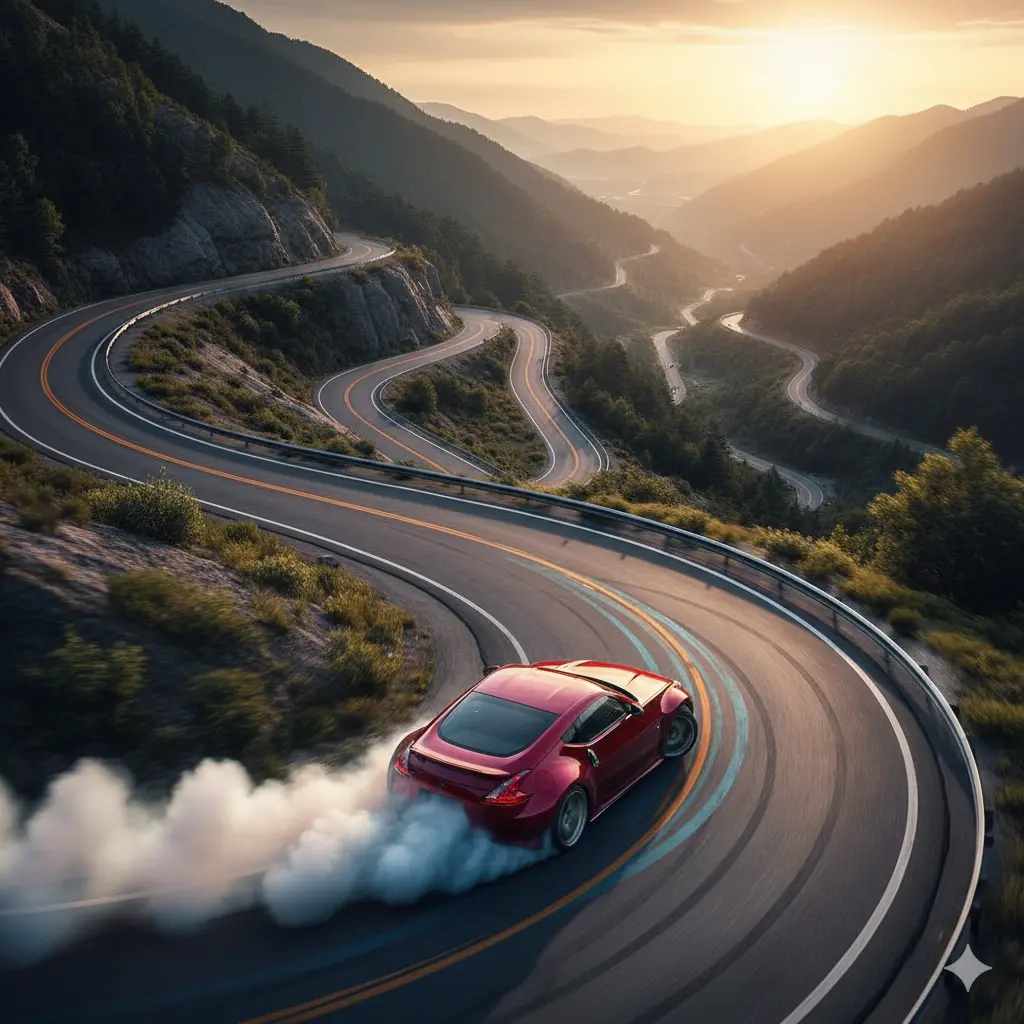
Drift routes shape driving skill more than car choice. Track layout determines what techniques you learn.
This guide ranks global-style routes by difficulty, flow, and learning value. Match route to current ability for fastest improvement.
What Makes a Drift Route “Good” in FR Legends?
Quality routes teach specific skills while remaining enjoyable.
Corner flow and rhythm:
Linked sections connect naturally. Each corner exit sets up the next entry smoothly. You maintain momentum rather than constantly resetting.
Poor rhythm breaks concentration. Good flow enables a focus on technique refinement rather than survival.
Elevation changes:
Uphill and downhill sections teach control of weight transfer. Gravity affects grip differently constantly. Adaptability develops through varied elevation.
Flat tracks limit learning scope. Elevation variety builds a complete understanding.
Entry and exit balance:
Corner types demand different approaches. Some need aggressive entry. Others reward a controlled setup. Variety develops versatile techniques.
Repetitive corners teach one skill only. Balanced routes create well-rounded drivers.
Learning curve:
Progressive difficulty enables growth. Too easy teaches nothing new. Too hard frustrates before teaching. Proper difficulty curve matches ability level.
Beginner-Friendly Drift Routes:
These routes build confidence through forgiving characteristics.
School Course
Wide corners: Generous space for corrections mid-drift. Mistakes stay manageable. Wall proximity is minimal throughout.
You learn without constant crash fear. Confidence develops through success naturally.
Forgiving exists: Extra run-off space enables experimentation. Poor exit positioning stays salvageable. Recovery happens before consequences materialize.
Perfect for learning throttle control: The wide layout clearly shows the effects of throttle. Too much or too little becomes obvious immediately. Feedback enables adjustment.
Drift Park
Open layout: Maximum space, minimizing danger. You constantly focus on technique rather than on obstacle avoidance.
Practice environment without pressure. Skill development happens efficiently here.
Low-pressure environment: No scoring emphasis. Just pure practice focus. Mistakes teach without penalty beyond reset.
Best for practicing transitions: Space enables repeated direction changes. You isolate the transition technique specifically. Weakness correction happens systematically.
USAIR Motorsports
Balanced turns: Mix of corner radii and speeds. Neither too tight nor too open. The middle ground teaches adaptability.
Stable grip zones: Predictable traction behavior. You learn car control without fighting inconsistent physics. The foundation builds properly.
Ideal for consistent laps: Layout enables repeatable performance. You measure improvement objectively through lap times. Progress becomes clearly visible.
Intermediate Drift Routes
These routes help beginners transition to advanced capabilities.
Ebisu Minami
Smooth corner chains: Flowing linked sections. Each drift connects to the next naturally. Rhythm develops through continuous practice.
Good stepping stone toward full Ebisu difficulty. Manageable challenge level.
Teaches angle control: Moderate corner speeds demand sustainable angle. Too many spins for you. Too few score poorly. The balance point becomes clear.
Gunsai Touge
Narrow lines: Limited correction space forces precision. Clean execution becomes necessary, not optional.
Mistakes show immediately. Feedback quality accelerates improvement significantly.
Entry precision matters: Slight speed miscalculation costs the entire section. You learn to judge optimal entry consciously. Skill transfers everywhere afterward.
Meihan Kansai
Fast transitions: Quick direction changes test smoothness. Harsh inputs break the flow audibly and visibly. Finesse develops necessarily.
Rhythm-based drifting: Timing matters more than power. Finding the pattern rewards more than forcing aggression. Understanding beats capability.
Testing new cars on intermediate routes clearly reveals their handling characteristics. Neither too easy nor too hard for proper evaluation.
Pro-Level Drift Routes (High Risk, High Reward)
These routes demand mastery and complete focus.
Ebisu Touge
Steep elevation: Constant uphill and downhill, affecting grip dramatically. Weight transfer management becomes critical in every section.
No relaxation moments exist. Concentration stays maximum throughout the entire run.
Zero room for mistakes: Wall proximity constant. Small errors end runs instantly. Perfection becomes a requirement, not a goal.
Akina-Style Mountain Pass
Tight hairpins: Extreme steering lock is needed regularly. Entry speed tolerance minimal. Precision separates clean runs from failures.
Iconic layout testing complete skill set. Mastery here proves comprehensive ability.
Perfect line discipline required: Optimal path is narrow throughout. Deviation costs momentum immediately. Understanding racing lines becomes mandatory.
Hakone Turnpike
High-speed entries: Momentum builds naturally before corners. Managing accumulated speed while initiating drift demands exceptional control.
Demands throttle discipline: Downhill gravity reduces rear grip. Adding throttle spins most setups instantly. Feathering becomes a constant requirement.
Even the Supra mod struggles here without perfect throttle control. Power alone solves nothing on demanding routes.
Best Cars for Each Route Level
Route difficulty determines optimal platform characteristics.
Beginner Routes
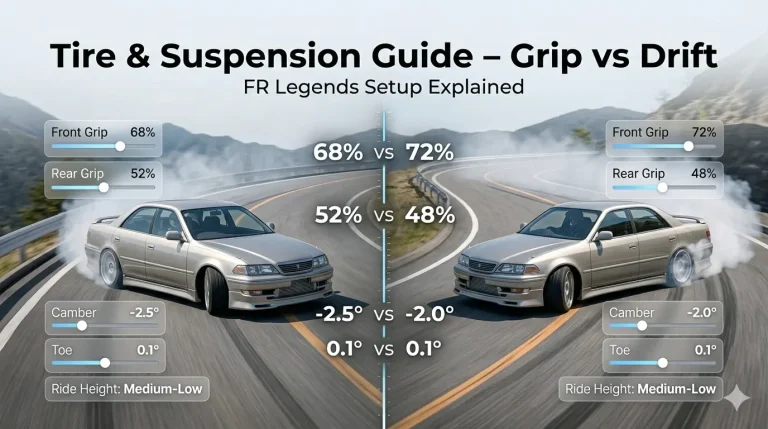
Balanced grip builds: Front 65-68%, rear 52-55%, creates forgiving behavior. Stability enables learning without chaos.
AE86, GT86, moderate S13 setups. Platforms prioritizing control over capability.
Stable suspension: Medium settings, communicating clearly. You feel grip changes developing. Warning prevents mistakes.
Intermediate Routes
Mid-power RWD cars: 350-450 HP range balancing capability with manageability. Adequate angle authority without overwhelming control.
370Z, JZX90, balanced Silvia builds. Platforms accepting technical demands while staying controllable.
Smooth steering response: Progressive turn-in suiting flowing layouts. Harsh response creates jerky transitions. Smoothness matters increasingly.
Pro Routes
Precision builds: Tight suspension and grip balance enabling exact control. Small adjustments produce predictable results. No vague responses tolerated.
Controlled torque delivery: Linear power curves preventing sudden traction loss. You modulate precisely instead of fighting spikes. Smoothness becomes mandatory.
Lower power than expected often. 400-450 HP maximum on extreme routes. Control beats capability decisively here.
How Route Choice Impacts Your Drift Scores
Track selection affects scoring beyond just difficulty level.
Judges reward consistency: Repeatable performance scores higher than occasional perfection. Routes enabling consistency benefit scores directly.
Choose routes matching your ability. Struggling constantly prevents consistent development.
Cleaner exits matter more on technical routes: Tight sections amplify the importance of exit positioning. Poor exits immediately ruin the next entry. Compounding effects dramatic.
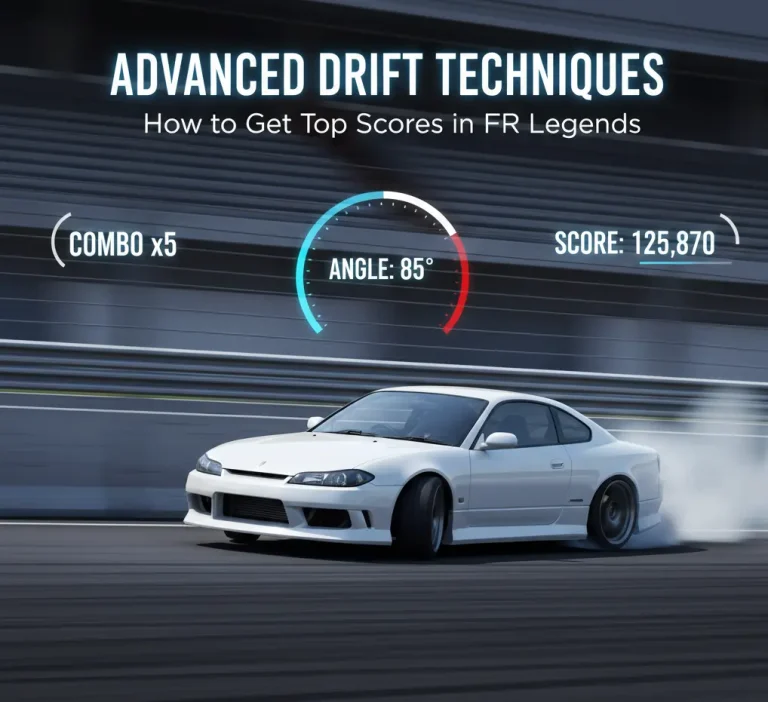
Speed matters less than control: High velocity is visually impressive. Controlled execution impresses judges. Technical routes reward precision over flash.
Route Practice Tips for Faster Improvement
Systematic practice produces reliable progress.
Repeat short sections: Master individual corners before linking full runs. Perfection in isolation transfers to complete attempts. Build systematically upward.
Focus on one corner at a time: Identify the weakest section specifically. Practice that exclusively until improvement shows. Then address the next weakness.
Adjust tuning per route: Different layouts demand different setups. Technical routes need stability. Flowing routes accept aggression better. Adapt configurations appropriately.
Base FR Legends teaches the fundamentals of route mastery. Even exploring various mods demands this same systematic approach. Principles transfer universally.
Official Routes vs Modded Routes
Both serve important learning purposes.
Official routes for fundamentals:
Polished layouts teaching core skills reliably. Proven difficulty curves. Guaranteed compatibility across versions.
Start here always. The foundation must exist before exploring variety.
Modded routes for advanced mastery:
Variety prevents a plateau through fresh challenges. Unconventional layouts forcing adaptation. Creativity expanding understanding.
Progress here after official routes feel comfortable. Sequence matters for effective development.
Common Mistakes Players Make on Advanced Routes
These errors appear repeatedly on difficult tracks.
Entering too fast: Accumulated speed feels manageable until turn-in. Then physics wins brutally. Conservative entry prevents this consistently.
Over-steering: Excessive steering input, trying to force rotation. Actually, it upsets the balance worse. Small corrections work better always.
Ignoring exit lines: Focusing only on apex positioning. Exit directly determines the success of the next section. Complete corner awareness matters.
Which Route Should You Practice Daily?
Match practice venue to goals and playing style.
Casual players:
Beginner routes maintain enjoyment. School Course or Drift Park. Fun without frustration. Skill develops naturally through relaxed practice.
Competitive drifters:
Intermediate routes build battle-ready skills. Ebisu Minami or Meihan. Challenges forcing improvement without overwhelming completely.
Score-focused players:
Pro routes maximize scoring potential. Hakone, full Ebisu, mountain passes. Mastery here translates to high scores everywhere.
Visual customization through livery codes works identically across all routes. The separate system functions independently from track selection.
Final Thoughts
Route selection determines skill development trajectory.
Routes define skill more than cars:
Track layout forces technique adaptation. Car choice enables or limits within that framework. But routes fundamentally determine what you learn.
Progressing route difficulty builds real control:
Gradual advancement from beginner to pro routes. Systematic improvement through appropriate challenges. Foundation before complexity always.
Encourages players to step outside comfort zones:
Familiar routes plateau eventually. New layouts reset the learning curve intentionally. Growth requires discomfort periodically.
FAQ’s:
Which route is best for beginners?
School Course clearly. Wide corners forgive mistakes generously. Low wall danger reduces crash anxiety. Perfect throttle control learning environment. Start here before attempting technical layouts.
What is the hardest drift route in FR Legends?
Ebisu Touge is generally considered the hardest. Steep elevation changes constantly. Zero error margin throughout. Wall proximity is relentless. Demands complete mastery, demonstrating comprehensive skill.
Do modded routes improve skills faster?
Not necessarily faster, differently. Modded routes provide variety, preventing a plateau. But official routes teach fundamentals more reliably. The combined approach produces the best results overall.
Which car suits mountain routes best?
Lightweight platforms like AE86 handle tight mountain sections naturally. Quick steering navigates narrow roads effectively. Moderate power (350-400 HP) prevents overwhelming confined spaces. Balance beats capability here.
How often should I change practice routes?
Change when the current route feels consistently too comfortable. Plateau indicates readiness for a new challenge. But master routes thoroughly before moving. Premature progression wastes a learning opportunity.