How to Build the Perfect Drift Car in FR Legends
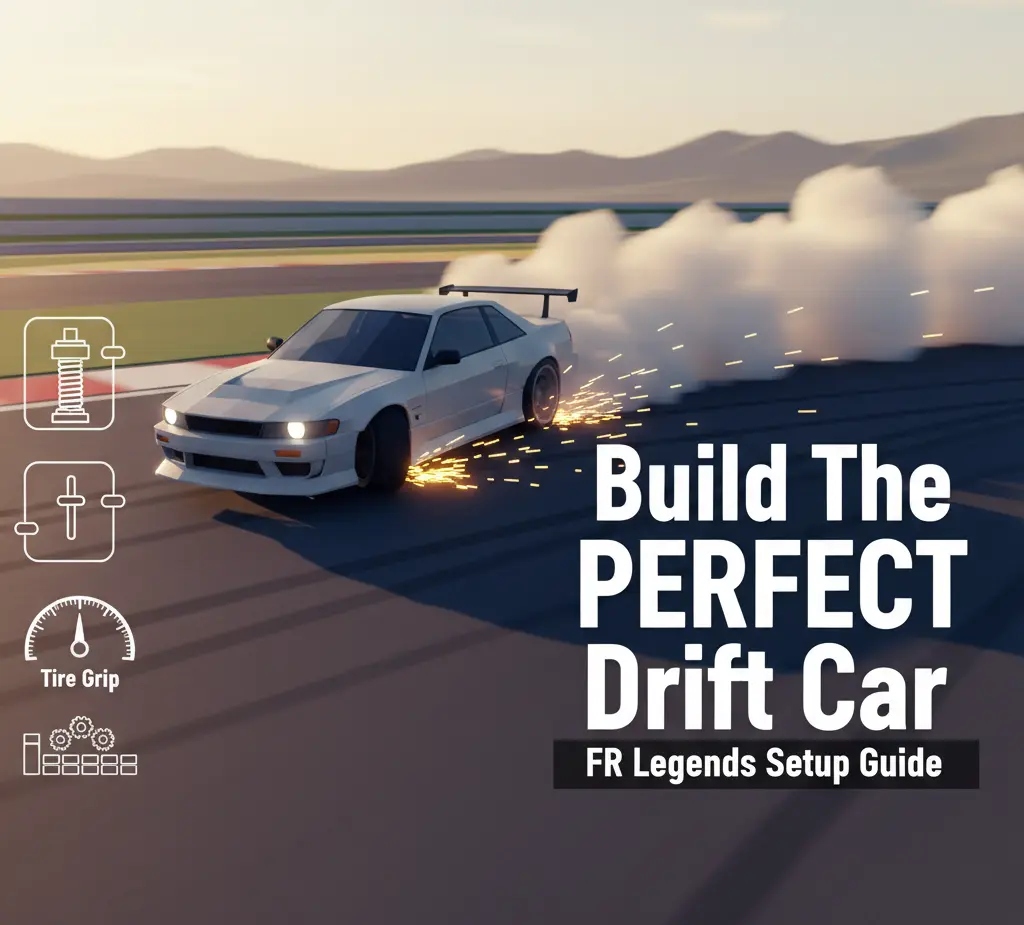
Building a drift car is not about maxing every setting. Most players do that and wonder why their car spins uncontrollably.
This guide walks through each step of creating a drift car that actually works. No guessing. No wasted upgrades.
What Makes a Drift Car “Perfect” in FR Legends?
Perfect means the car consistently does what you want. Nothing more complicated than that.
Difference between grip cars and drift cars:
Grip cars maximize traction for fast lap times. Drift cars balance traction to slide controllably. Grip setups fight you when you try to drift. Drift setups let the rear break loose while keeping the front planted enough to steer.
Why balance matters more than raw power:
High power with a poor setup just spins tires without control. Moderate power with proper balance lets you hold the angle smoothly. The car responds to throttle adjustments instead of going binary between grip and spin.
Most players chase horsepower when they should fix suspension and tires first.
Beginner vs advanced drift builds:
Beginners need forgiving setups. Stable at lower angles. Predictable breakaway. Room for throttle errors.
Advanced builds prioritize precision. Sharper response. Higher angle capability. Less forgiveness but more control when executed properly.
Step 1: Choosing the Right Base Car
The foundation determines everything else.
Best Beginner Drift Cars
Why are lighter cars easier to control?
Lightweight means quick direction changes and less momentum to manage. Mistakes are corrected faster. Wall impacts hurt less. You learn proper technique without fighting heavy physics.
AE86 and S13 are standard recommendations for good reason. Both forgive sloppy inputs while teaching fundamentals. The JDM cars in FR Legends offer various options, but start simple.
Common beginner mistakes when choosing cars:
Picking cars based on looks instead of handling. Choosing high-power builds before understanding throttle control. Starting with heavy cars that punish every error.
Your first car should bore you slightly. If it feels exciting immediately, it is probably too difficult.
Cars for Advanced Drifters
Higher power builds:
Once throttle control is solid, more power lets you hold steeper angles and sustain longer drifts. But power amplifies mistakes. What was a small error in a low-power car becomes a spin in a high-power one.
The Supra mod exemplifies this. Massive power potential but requires precise inputs.
Cars that reward precision:
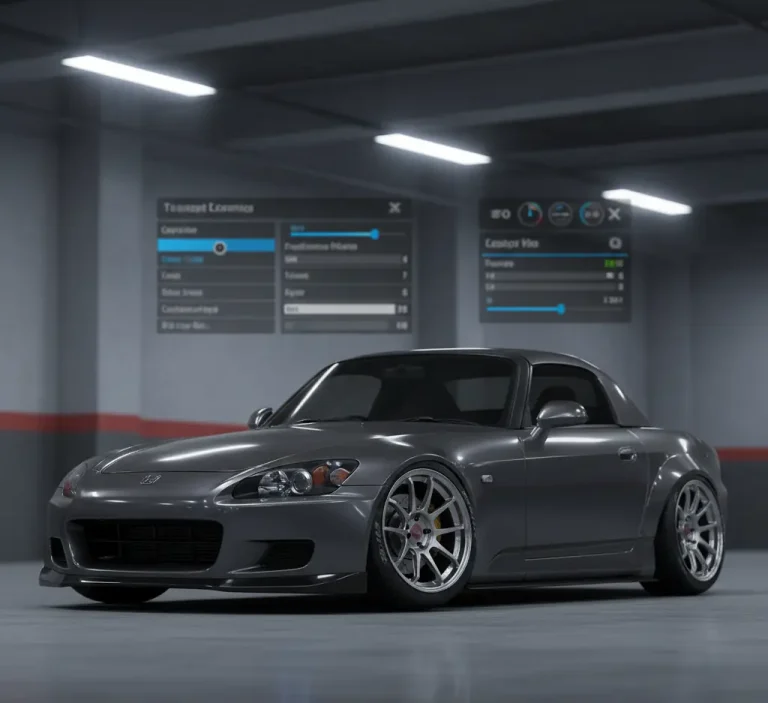
Neutral-balance cars like the S2000 do exactly what you tell them. No natural oversteer to help rotation. No understeer to prevent spinning. Pure input response. These cars clearly expose weaknesses, which accelerate improvement for experienced drivers.
Step 2: Engine Power and Horsepower Balance
More power does not equal better drifting. This concept confuses most players.
How Much Horsepower Do You Really Need?
Low HP vs high HP drifting:
Low horsepower (under 250 HP) forces proper technique. You cannot muscle through sections with throttle. Entry speed and line choice matter more. Angle comes from steering and weight transfer, not power.
High horsepower (over 400 HP) maintains angle effortlessly but demands throttle discipline. Too much input spins you. Too little straightens the car. The margin shrinks.
Power control importance:
Moderate power gives you throttle range to work with. You can add or reduce angle mid-drift through small throttle changes. This control matters more than peak numbers.
Engine Upgrade Strategy
When to upgrade:
Upgrade power when you consistently execute clean runs but cannot maintain angle through long corners. If you are still correcting mid-drift or fighting the car, more power makes things worse.
When to keep power stock:
Keep it stock while learning initiation, throttle modulation, and weight transfer. Stock power teaches fundamentals without overwhelming you. Most improvement comes from technique, not upgrades.
Step 3: Suspension Setup for Smooth Drifts
Suspension determines how the car transitions and holds its angle.
Ride Height Settings
Stability vs clearance:
Lower ride height reduces body roll and sharpens response. The car feels planted. But too low reduces weight transfer, which can hurt rotation in tight corners.
Higher ride height adds body roll, helping initiate drifts through weight shift. More forgiving but less precise.
Common ride height mistakes:
Dropping it fully because “lower is better.” This works for grip driving, not drifting. Medium-low gives you stability with enough weight transfer to rotate the car naturally.
Camber, Toe, and Caster Basics
How each setting affects the drift angle:
Front camber controls turn-in bite. More negative camber (around -2 to -3 degrees) sharpens the initial response. Too much makes the car nervous and twitchy.
Rear camber affects slide predictability. Start around -2 degrees. Too much negative camber makes the car snap into oversteer. Too little creates understeer mid-drift.
Toe settings matter less for casual drifting. Keep them near zero unless fixing specific handling quirks.
Beginner-friendly ranges:
Front camber: -1.5 to -2.5 degrees Rear camber: -1.5 to -2.5 degrees Toe: 0 to slight toe-out on rear
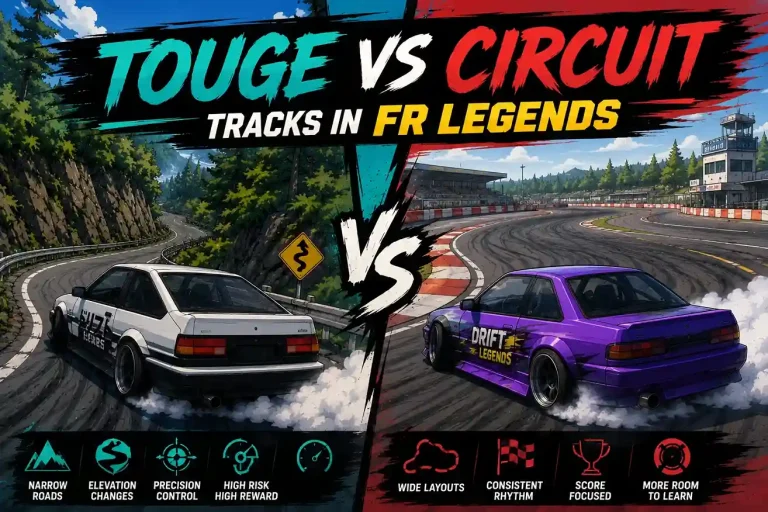
Test changes on different drift tracks to see what actually works for your driving style.
Step 4: Tire Selection and Grip Balance
This setting controls everything about how your car drifts.
Front vs Rear Tire Grip
Why mismatched grip help drifting?
A higher front grip with a lower rear grip creates controlled oversteer. Fronts bite for steering while rears break loose for rotation. This imbalance is intentional.
Equal grip front and rear makes the car either understeer or snap unpredictably. No middle ground for controlled slides.
Tire Wear and Control:
More rear grip makes the car stable and predictable. Good for learning. Less rear grip makes it playful but sensitive to throttle errors.
For most tracks, run medium rear grip with slightly higher front grip. Adjust based on whether you are spinning too easily (add rear grip) or cannot initiate (reduce rear grip).
When to Adjust Grip
Change grip settings when:
- You spin on every entry (too loose)
- Car refuses to break loose (too grippy)
- Throttle control feels too sensitive (reduce rear grip)
- Drifts feel vague and imprecise (add rear grip)
Step 5: Gear Ratios and Transmission Tuning
Gearing keeps you in the powerband where the engine makes usable torque.
Short vs Long Gear Ratios
When to use each:
Short gears keep RPMs high constantly. Each gear hits redline quickly. Good for technical tracks with frequent shifts and tight corners.
Long gears reduce shift frequency. Better for tracks with long sweepers where you hold one gear through multiple corners.
Track-Based Gear Tuning
Tight tracks vs open circuits:
Tight technical tracks need short gears. You are always accelerating or braking, never cruising. First gear should break traction easily. The second and third should cover typical drift speeds (40-70 kph).
Open circuits with long corners can use longer ratios. You want to stay in the powerband through sustained drifts without constantly shifting.
Wrong gearing drops you out of the power range mid-drift. Throttle response dies. Angle decreases. You either shift awkwardly or lose the combo.
Step 6: Steering, Brakes, and Handbrake Setup
Control inputs determine how cleanly you execute the technique.
Steering Angle Optimization
Avoiding snap oversteer:
Too much steering angle lets you reach extreme angles, but makes transitions jerky. The car snaps between lock positions instead of flowing smoothly.
A moderate steering angle (around 40-50 degrees, maximum lock) keeps transitions smooth while providing enough angle for scoring.
Handbrake Timing Tips
Clean drift initiation:
Handbrake initiates drifts on entry. Quick tap breaks rear traction without killing momentum. Hold it too long, and speed drops too much for linking corners.
Practice handbrake timing separately before combining with throttle and steering. Most beginners either tap too briefly (nothing happens) or hold too long (the car slows excessively).
Step 7: Visual Customization
Visuals do not affect performance but help with immersion and motivation.
Body kits look aggressive, but change nothing mechanically in FR Legends. Choose based on preference alone.
Livery codes let you copy designs created by other players. Popular styles range from clean single-color builds to full race liveries. Start simple, add complexity as you experiment.
Common Drift Build Mistakes to Avoid
Too much power too early:
Adding maximum horsepower before understanding throttle control makes the car undriveable. Every input becomes binary. You either spin or go straight. Fix technique first, add power later.
Incorrect tire balance:
Running tires too loose creates unpredictability. Running them too grippy prevents initiation. Test different balance points and note which feels smoothest through full laps.
Ignoring suspension tuning:
Maxing power and leaving suspension stock wastes the build. Suspension determines how the car transitions and holds its angle. Tune it properly, and moderate power feels controllable. Ignore it, and high power feels chaotic.
Beginner Drift Build vs Pro Drift Build
How setups evolve with skill:
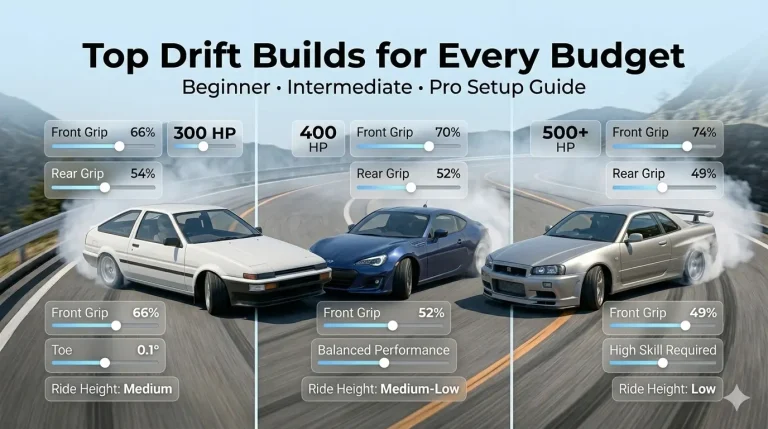
Beginner builds prioritize stability and forgiveness. Higher rear grip. Moderate power. Forgiving suspension. These settings hide mistakes while you learn fundamentals.
Pro builds chase precision and angle capability. Lower rear grip. Higher power. Stiffer suspension. These settings expose mistakes but reward perfect execution with higher scores.
When to upgrade:
Move toward pro setups when beginner setups feel limiting. If you consistently nail entries but cannot maintain angle, reduce rear grip slightly. If you execute clean lines but score low, add power gradually.
Never jump from a beginner setup to a pro setup in one step. Increment changes and test thoroughly. Most players upgrade too fast and regress in skill.
Summary:
The perfect drift car matches your current skill level.
Beginners chasing pro setups frustrate themselves. Advanced players using beginner setups plateau in scores. Match setup to ability.
Practice matters more than any setting. A mediocre setup driven well beats a perfect setup driven poorly. Spend more time practicing than tweaking.
Experiment constantly. These recommendations provide starting points, not absolute rules. Your driving style determines what actually works. Test everything. Keep what helps. Change what does not.
Check out new cars in FR Legends mods to expand options once fundamentals are solid. More variety keeps practice interesting without changing core technique requirements.
FAQ‘s:
What is the best drift car for beginners in FR Legends?
AE86 or S13. Both forgive mistakes while teaching proper technique. Lightweight makes direction changes easy. Moderate power prevents overwhelming new players. Start here before moving to higher-performance builds.
How much HP is ideal for drifting?
150-250 HP for learning fundamentals. 250-400 HP for intermediate drifting. Above 400 HP is only achieved after throttle control is mastered. More power does not make you better. It amplifies whatever skill level you already have.
Do tuning settings change per track?
Yes. Tight technical tracks need short gears and responsive steering. Open tracks work better with longer gears and stable suspension. Tire grip might need adjustment based on track surface and layout. Test setups on multiple tracks.
Can I drift without using mods?
Yes. The Base game FR Legends includes everything you need to learn drifting. Mods add variety to cars and unlock content faster, but are not required for skill development. Stock content teaches the same fundamentals.