FR Legends Suspension Settings Guide
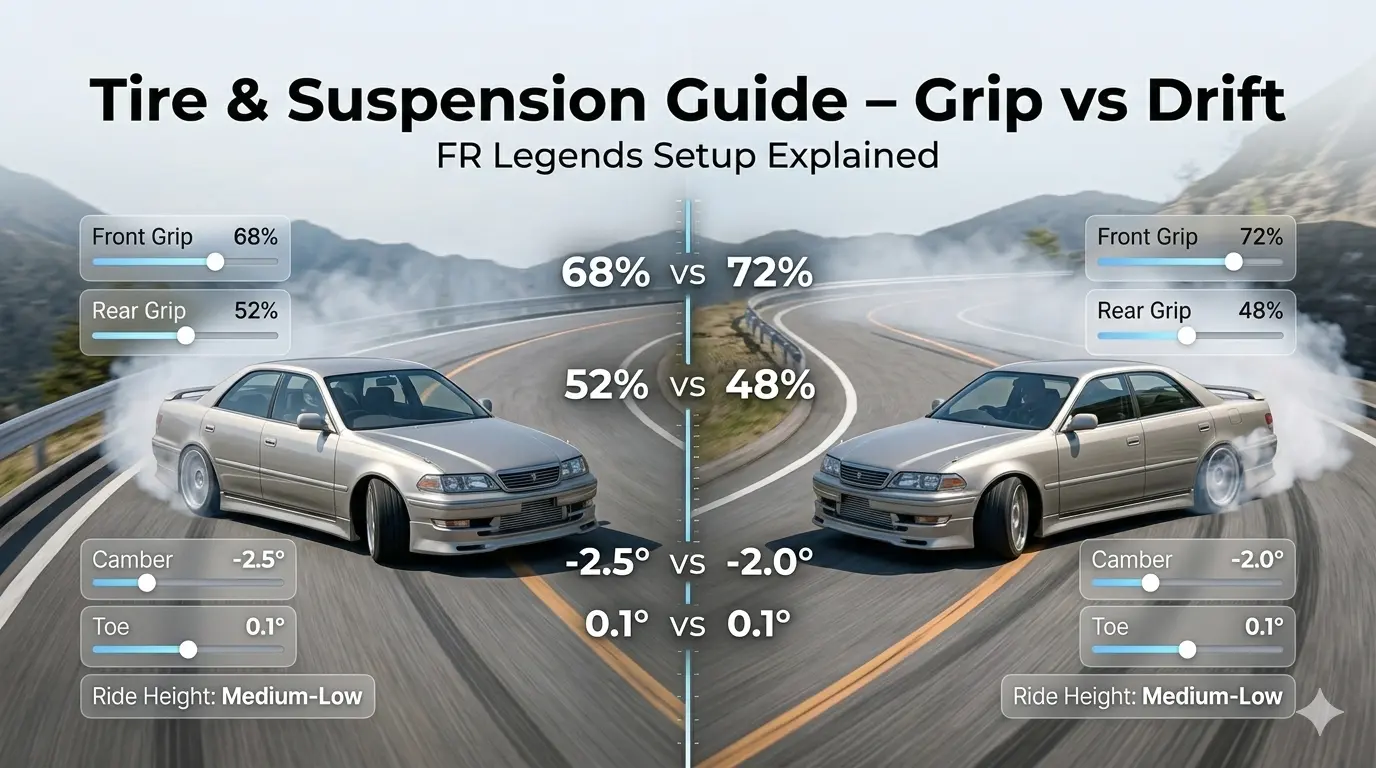
Suspension controls how your car transfers weight and holds stability through a drift, separate from how much grip the tires provide. Tire pressure and suspension serve different jobs. If you haven’t dialed in tire settings yet, the FR Legends Tire Settings Guide covers that first.
This guide covers suspension only: camber, toe, ride height, stiffness, and weight transfer.
What Do Suspension Settings Change?
Suspension settings change stability, weight transfer speed, transition behavior, and corner predictability.
Camber and toe shape how tires meet the road during turn-in and mid-drift. Ride height and stiffness control how fast weight shifts between corners.
Understanding Camber Settings
Front Camber
Front camber affects turn-in response and steering precision. More negative camber sharpens turn-in but reduces straight-line stability. Less camber feels stable but turns in slower.
Rear Camber
Rear camber affects drift angle support and traction balance. More negative rear camber helps hold angle. Too much reduces overall traction and makes the rear feel unpredictable on exit.
Understanding Toe Settings
Toe-in points the front tires slightly inward, adding stability but slowing turn-in. Toe-out points them outward, sharpening turn-in but reducing high-speed stability.
Most drift setups lean toward a slight toe-out front for quicker response, paired with neutral rear toe to keep the back end predictable during transitions.
Ride Height Explained
Lower ride height reduces body roll and speeds up weight transfer, suiting aggressive, fast-transition driving. Higher ride height slows weight transfer but adds stability, helping newer players feel more in control.
The most common mistake is dropping ride height too far too quickly, which can make a car twitchy and harder to predict on uneven surfaces.
Suspension Stiffness Explained
Softer suspension transfers weight more gradually, giving a smoother, more forgiving feel through transitions. Stiffer suspension transfers weight faster, rewarding precise inputs but punishing mistakes harder.
Driver preference matters here. Some players prefer the predictability of softer setups; experienced drivers often favor stiffer suspension once technique is consistent.
How Weight Transfer Affects Drifting
Weight transfer shapes every phase of a drift differently.
Entry: Weight shifts forward under braking, loading the front tires and setting up initial rotation.
Mid-drift: Weight settles toward the outside, where camber and stiffness determine how stable that hold feels.
Transition: Weight shifts rapidly side to side, and this is where ride height and stiffness have the biggest combined impact on how fast and clean the transition feels.
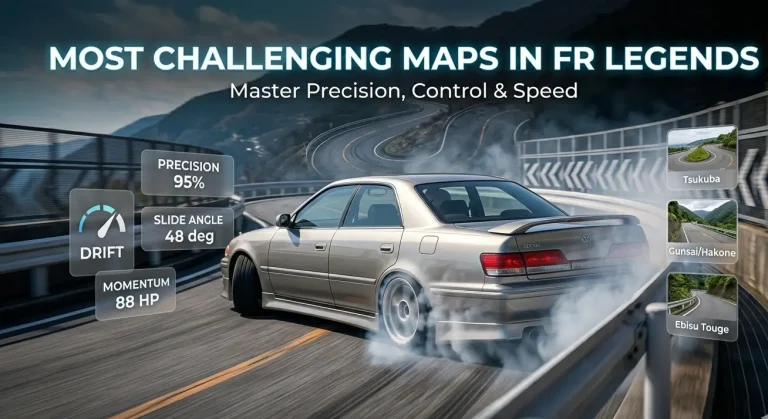
Exit: Weight settles back toward the rear as the car straightens, and rear camber plays a direct role in how smoothly that recovery happens. Clean exits matter most on technical layouts like those covered in challenging maps in FR Legends, where the next corner often arrives quickly.
Suspension Setups for Different Driving Styles
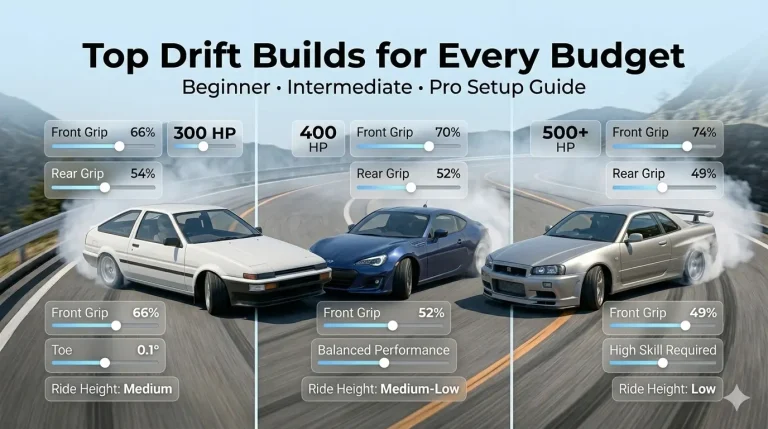
Beginner Setup
Moderate camber, neutral toe, and slightly higher ride height. Prioritizes predictability while fundamentals are still developing.
Balanced Setup
Moderate negative camber front and rear, slight toe-out, and mid-range ride height. Works well across most tracks without leaning hard into any one extreme.
Aggressive Drift Setup
Higher negative camber, pronounced toe-out, and lowered ride height with stiffer suspension. Rewards fast, precise transitions but punishes hesitation or inconsistent inputs.
Suspension Recommendations by Track Type
Technical tracks benefit from slightly stiffer suspension and more aggressive camber, since quick, precise weight transfer matters most. Tracks like Hakone Turnpike reward this kind of sharp, responsive setup.
High-speed tracks generally favor softer, more stable suspension, since stability at speed matters more than instant transition response.
Touge roads often call for a setup similar to technical tracks, prioritizing quick weight transfer and predictable camber response over outright stability. The FR Legends Drift Tracks Guide covers which track types suit which suspension priorities in more depth.
Common Suspension Mistakes
- Running extreme camber. Maximum negative camber looks aggressive,sive but often costs more traction than it gains.
- Making excessive ride height changes. Dropping ride height too far at once usually creates instability rather than improving transitions.
- Using overly stiff setups too early. Stiff suspension punishes small mistakes, making it harder for developing players to improve.
- Copying pro settings exactly. Pro setups are tuned around specific cars and styles that may not match your own.
How to Diagnose Suspension Problems
An unstable feel through corners usually points to a ride height too low or stiffness too high for your skill level. Slow transitions trace back to suspension that’s too soft or mismatched with camber. Excessive body movement means ride height is too high; inconsistent corner entry usually points to front camber.
When Should You Adjust Suspension?
Revisit suspension when switching to a new track type, installing a car with a different weight distribution, or facing stability or transition issues that tire adjustments haven’t fixed.
Final Thoughts
Suspension shapes how a car transfers weight and holds stability, making it just as important as tire tuning, though it solves a different problem. Make gradual changes rather than large jumps, and tune suspension after tire pressure feels right, since tires have a more immediate effect on handling. Once your suspension feels dialed in, gear ratio tuning is a natural next step.
FAQs
What is the best camber setting in FR Legends? No universal best setting exists since it depends on track type and driving style, but moderate negative camber front and rear works as a reliable starting point.
Does ride height affect drifting? Yes. Lower ride height speeds up weight transfer for aggressive transitions, while higher ride height adds stability that suits newer players.
What does toe-out do? Toe-out sharpens turn-in by pointing the front tires slightly outward, though it can reduce high-speed stability if overdone.
Should beginners change suspension settings? Beginners can make small adjustments, but should favor moderate, stable setups over aggressive camber or stiffness changes early on.
How much camber is too much? Camber becomes excessive once it starts costing more straight-line traction than it gains in turn-in sharpness, which varies by car.
What suspension setting affects transitions the most? Stiffness and ride height together have the biggest combined impact on transition speed and feel.
Should I use the une suspension before tires? No. Tire pressure should be tuned first, since it has the more immediate effect on handling. Suspension works best once tire settings already feel close to right.
Does suspension affect drift scores? Indirectly, yes. Suspension influences stability, transition speed, consistency, and weight transfer, all of which can affect scoring performance during drift runs.