Engine Swaps That Transform Your FR Legends Car
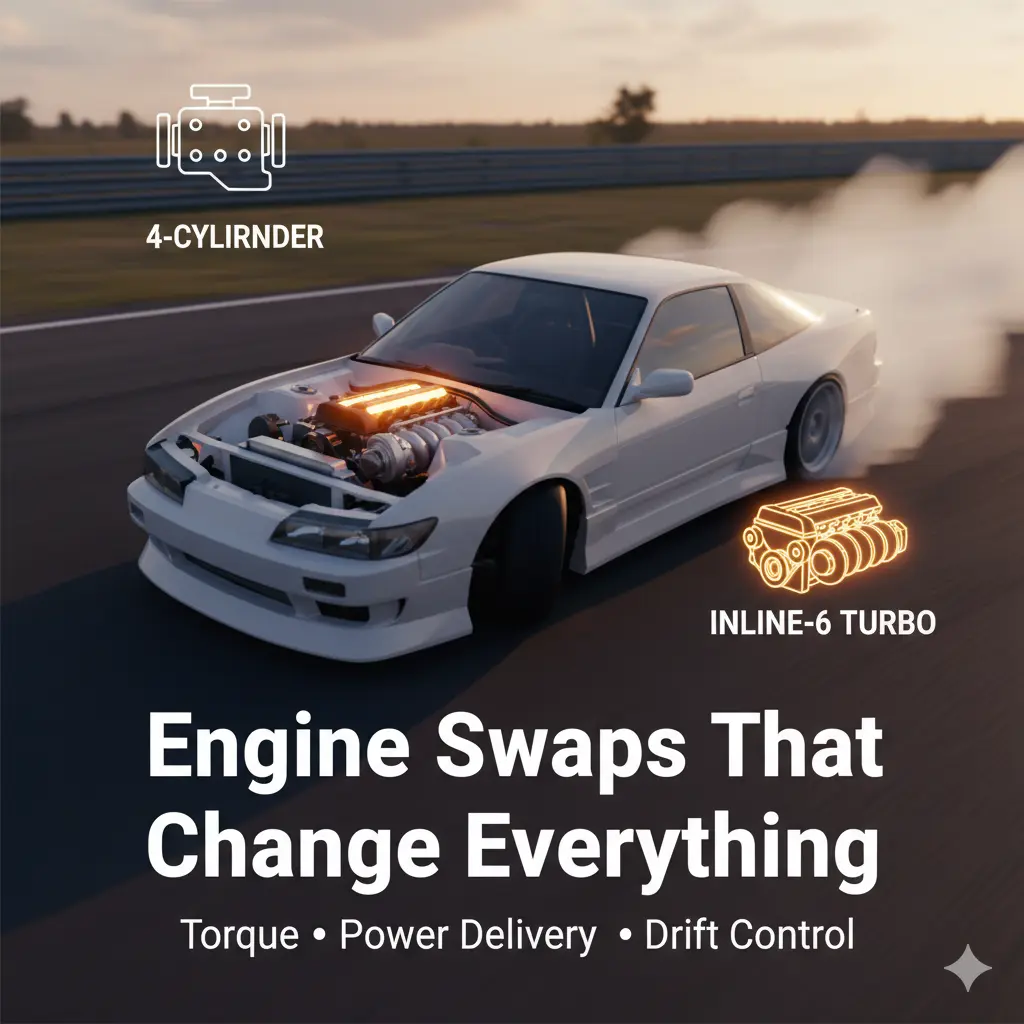
Engine swaps change how your car behaves more than any visual modification. But most players swap engines for the wrong reasons.
This guide covers which swaps actually improve drifting and which ones just add problems.
Why Engine Swaps Matter in FR Legends
Swapping engines is not about chasing peak horsepower numbers.
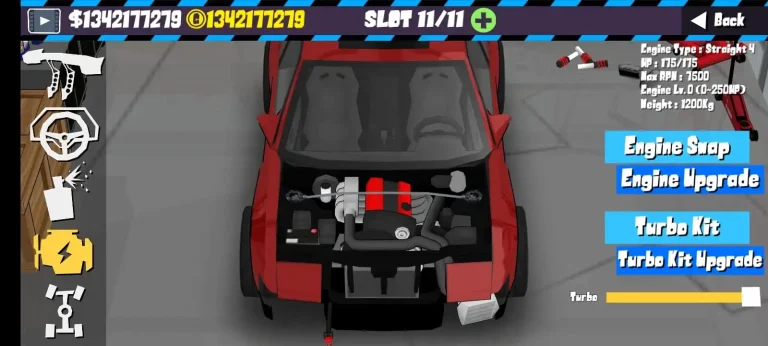
What an engine swap changes in gameplay:
Power delivery curve shifts completely. Torque arrives at different RPM ranges. Throttle response timing changes. Weight distribution moves slightly forward or back, depending on engine mass.
These changes affect every aspect of drifting. Entry speed tolerance. Angle maintenance. Transition smoothness. Exit control.
Power delivery vs control:
High-output engines give you angle authority but demand precise throttle inputs. Moderate engines provide throttle range to work with. You can adjust the angle in small increments instead of fighting the binary on-off power.
When engine swaps actually help drifting:
Swaps help when you consistently execute clean runs but lack the power to maintain angle through long corners. They help when your driving outgrows the stock engine’s capability.
Swaps hurt when you are still learning throttle modulation or fighting the car through sections. More power amplifies existing mistakes.
Understanding Engine Characteristics Before Swapping
Numbers mean nothing without understanding what they create.
Torque vs Horsepower
Why torque matters more for drifting:
Torque determines how much force pushes the car to the side. High torque at low RPM means instant angle adjustment. Low torque requires higher RPM to achieve the same effect.
Horsepower is torque multiplied by RPM. High horsepower from high-revving engines feels smooth but takes time to build. High horsepower from low-rev torque feels punchy and immediate.
Smooth power vs aggressive spikes:
Smooth linear power delivery hides throttle input changes. You do not feel mistakes until traction is already gone. This makes overcooking throttle easy.
Aggressive power spikes telegraph themselves clearly. You feel when you are about to lose grip. This gives a warning but demands faster reactions.
RPM Range and Throttle Control
High-rev engines vs low-end pull:
High-rev engines like rotaries need constant RPM management. Let revs drop, and power disappears. This rewards good shifting but punishes lazy gear selection.
Low-end torque engines pull from anywhere in the rev range. You can be sloppy with shifts and still maintain the angle. Forgiving but less rewarding for precise driving.
Impact on drift consistency:
Consistency comes from predictable power delivery. Engines with flat torque curves provide a similar response at all RPMs. Peaky engines require staying in narrow power windows.
Best Engine Swaps for Drifting in FR Legends
These swaps appear most often for good reasons.
2JZ Swap
Why is it popular:
Massive torque with smooth delivery. The engine pulls hard from mid-range through redline. You maintain angle effortlessly through long sweepers without constant throttle adjustments.
Strengths and limitations:
Strengths: angle authority, forgiving power band, sounds intimidating.
Limitations: heavy engine affects turn-in response, too much power overwhelms beginners, and requires tire grip adjustments to avoid spinning.
Best car types for this swap:
Works best in heavier chassis that handle the weight penalty. Supra obviously. Also works in Silvia and heavier RWD platforms. Avoid putting it in lightweight cars like AE86, where it ruins balance.
RB26 Swap
Power delivery style:
Linear buildup with high-rev capability. Power arrives smoothly and keeps pulling past where other engines fade. You can hold higher RPM through corners without hitting the limiter.
Control in long drifts:
The smooth curve makes throttle modulation easier than peaky engines. You adjust the angle by making small throttle adjustments. Long, sustained drifts feel controlled rather than frantic.
SR20 Swap
Lightweight balance:
Compact four-cylinder keeps weight distribution neutral. Less mass up front means sharper turn-in compared to heavier swaps.
Moderate power output suits learning. Enough torque to drift properly, but not so much that mistakes instantly spin you.
Ideal for technical tracks:
Quick direction changes work better with lighter engines. The SR20 lets you flick between corners without fighting front-end weight. Technical tracks like Ebisu reward this agility over raw power.
Rotary Engine (RX-7 Style)
Smooth RPM behavior:
Rotaries rev freely without vibration or power pulses. The delivery feels almost electric. You stay in powerband easily because the engine pulls everywhere above 5000 RPM.
Unique drifting feel:
High-rev screaming creates a different rhythm compared to torque-heavy engines. You shift more frequently, but transitions feel smoother. Some players love this. Others prefer low-end grunt.
Best Engine Swaps by Driving Skill Level
Skill determines which swaps help versus hurt.
Beginner-Friendly Engine Swaps
Engines that forgive mistakes:
SR20 and similar moderate-output engines. Enough power to drift but not so much that throttle errors instantly spin you. Flat torque curves provide a consistent response.
Stock engines often work better than swaps for beginners. Learn throttle control first. Add power later.
Advanced Driver Engine Swaps
High-risk, high-reward setups:
2JZ and RB26 for maximum angle capability. These engines let advanced drivers hold extreme angles that moderate power cannot sustain. But one throttle mistake and you are spinning.
Rotary swaps reward precise shifting and RPM management. Advanced players maintain momentum through technical sections by staying in powerband constantly.
How Engine Swaps Affect Tuning Settings
Swapping engines completely breaks your existing tune.
Suspension Adjustments After a Swap
Weight distribution changes:
Heavier engines add front weight. This increases understeer on entry and changes how the weight transfers. You need softer front suspension or stiffer rear suspension to compensate.
Lighter engines sharpen response but can make the front feel nervous. Stiffen fronts slightly to add stability.
Gear Ratio Changes
Matching gears to engine behavior:
High-rev engines need shorter gears to stay in powerband. Low-torque engines need careful gear spacing to avoid dropping out of power range mid-drift.
Your old gear ratios stop working after swaps. Expect to retune completely. Test on different tracks to find what actually works. The Honda S2000 mod demonstrates this perfectly; high-revving engines demand specific gearing.
Engine Swap Compatibility with Cars
Not every engine works in every car.
Lightweight Chassis Compatibility
Avoiding overpowered setups:
An AE86 with a 2JZ sounds exciting, but it drives terribly. Too much power in too little weight creates wheelspin you cannot control. Front-end weight ruins the car’s best trait—agility.
Stick with SR20 or similar moderate swaps in lightweight chassis. Preserve the handling balance that makes these cars good.
Heavy Chassis Compatibility
Using torque efficiently:
Heavy cars need torque to move their mass through corners. Low-power engines struggle to maintain angle. High-torque swaps like 2JZ work naturally here.
The added engine weight matters less in already-heavy chassis. You lose less agility because you did not have much to begin with.
Common Engine Swap Mistakes
These problems show up constantly.
Too much power too soon:
Swapping to maximum power before mastering throttle control makes the car undrivable. You fight wheelspin constantly. Drifts feel chaotic instead of controlled.
Build power gradually. Master each level before adding more.
Ignoring tire grip:
Stock tire settings do not work with swapped engines. More power needs a different grip balance. Usually less rear grip to initiate easier, but this varies by engine and track.
Test tire settings after every swap. What worked before stops working immediately.
Poor throttle control:
Swapped engines expose throttle discipline weaknesses. Stock engines forgive sloppy inputs. High-output swaps punish everything.
If you cannot drive the stock engine smoothly, swapping makes things worse. Fix the technique first.
Engine Swaps in Multiplayer Drifting
Online battles change engine swap priorities.
Stability vs unpredictability:
Smooth engines provide consistency in tandem runs. You follow the lead car easily because the throttle response is predictable.
Peaky engines make following harder. Power arrives suddenly, which disrupts spacing. Good for solo runs, problematic for tandem.
Tandem drift considerations:
The lead car needs authority to force followers into difficult lines. High-torque swaps help here.
The following car needs precise throttle control to match the lead car spacing. Smooth power delivery helps more than peak output.
Are Engine Swaps Worth It in FR Legends?
Depends entirely on your current skill and goals.
When swaps improve performance:
When you execute clean runs consistently but lack the power to maintain an angle. When you understand throttle modulation and want more authority. When the stock engine limits your scores despite good technique.
When stock engines work better:
When you are still learning fundamentals. When you fight the car through sections. When you cannot link corners smoothly. When you spin frequently.
Stock engines teach proper technique. Swaps reward technique you already have.
Playstyle-based recommendation:
Technical precision drivers benefit from moderate swaps like SR20. Angle-focused drivers want high-torque options like 2JZ. High-rev enthusiasts choose rotaries.
Match the engine to the driving style, not just the power numbers. Playing FR Legends on PC or trying FR Legends 2 gives you more options to experiment with different swaps. The base FR Legends experience still teaches fundamentals best, regardless of engine choice. Even visual elements like livery codes should match your engine choice and build theme.
FAQ‘s:
What is the best engine swap for drifting in FR Legends?
SR20 for learning. Balanced power with forgiving delivery. 2JZ for advanced drivers wanting maximum angle. RB26 for smooth, long drifts. Rotary for high-rev style. Best swap depends on skill level and driving style, not just peak power.
Does engine swapping affect car balance?
Yes significantly. Heavier engines add front weight, increasing understeer. Lighter engines sharpen response but can feel twitchy. Weight distribution changes after every swap. Suspension and tire settings need to be retuned immediately. Old setups stop working.
Are engine swaps allowed in multiplayer?
Depends on lobby settings. Some servers allow any modifications. Others restrict to stock configurations. Custom lobbies usually permit swaps. Official matchmaking varies by game mode. Check server rules before joining competitive matches.
Can beginners use engine swaps effectively?
Not usually. High-output swaps amplify mistakes beginners still make. Throttle errors that cause small slides in stock engines create spins in swapped engines. Master fundamentals with stock power first. Add engine swaps after throttle control is solid.