Nissan 370Z Drift Build in FR Legends – Best Tune, Grip & Slide Guide
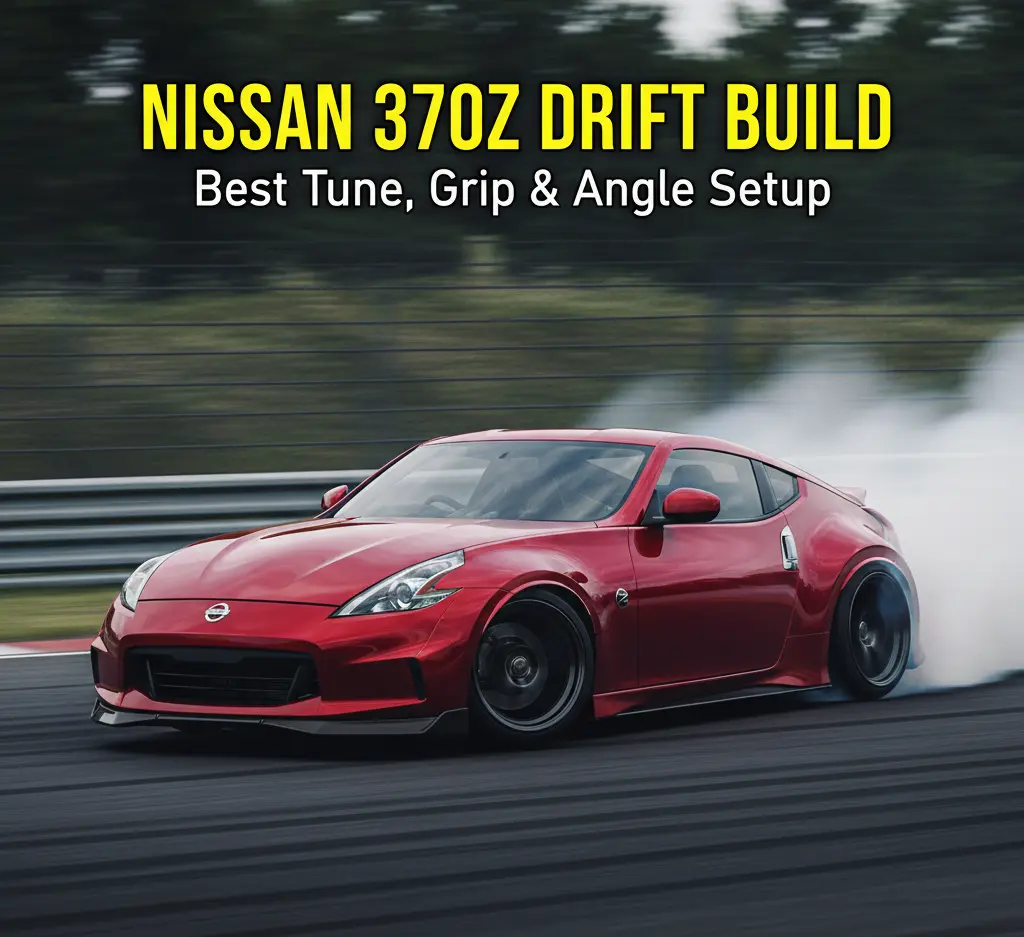
The 370Z handles differently from most FR Legends cars. Understanding why helps you tune it properly.
This guide covers proven setups that work for different skill levels and drift styles.
Why the Nissan 370Z Is a Strong Drift Choice in FR Legends
The 370Z sits between lightweight agile cars and heavy power builds.
Why players choose 370Z:
Good power without being overwhelming. The V6 delivers smooth torque that builds predictably. You get angle authority without constant wheelspin.
Weight distribution feels neutral. The car does not naturally oversteer like a Silvia or understeer like heavier platforms. You control everything through inputs.
Balanced power-to-weight:
Around 1500kg with 330HP stock. This ratio gives you enough momentum through corners without excessive mass fighting direction changes. Light enough to flick quickly. Heavy enough to carry speed.
Easy transitions:
Short wheelbase helps rotation without making the car twitchy. Left-right transitions happen smoothly. The car settles quickly between direction changes.
Good for beginners and intermediate players:
Beginners appreciate the forgiving power delivery. Throttle errors do not instantly spin you. Intermediate players like the precision once fundamentals are solid. The car responds accurately to good inputs.
Also Read: https://frlegndsmodapk.com/fr-legends-engine-swaps/
Stock vs Tuned 370Z – What Changes?
Stock 370Z drives predictably but lacks customization for specific styles.
Brief comparison:
Stock setup works for learning basics. Power feels adequate. Handling stays neutral. But you cannot optimize for angle, speed, or track type.
Tuned 370Z adapts to your driving style. More angle capability. Better entry control. Smoother transitions. Higher scores through optimization.
Why tuning matters:
Every track demands a different approach. Tight technical sections need a responsive setup. Open circuits reward stability. Tuning lets you match the car to the conditions.
How setup affects:
Entry angle: Suspension and tire grip determine how much rotation you get on initiation. Softer front with loose rear increases entry angle.
Drift stability: Balanced settings keep the car predictable mid-drift. Too aggressive, and it snaps unpredictably. Too stable, and you cannot adjust the angle.
Exit speed: Gear ratios and power delivery control acceleration out of corners. Wrong gearing drops you out of the power band. Speed dies.
Also Read: https://frlegndsmodapk.com/perfect-drift-car/
Best Engine Setup for Nissan 370Z Drift Build
Power determines which techniques work and which fail.
Recommended Horsepower Range
350HP to 450HP for control:
This range gives you throttle authority without overwhelming traction. You adjust the angle through small throttle changes. Mistakes are correctable.
Good for learning proper lines. Power builds smoothly. You feel what the car is doing before the traction breaks completely.
500HP and above for aggressive style:
High power holds steep angles effortlessly. Long sustained drifts become easier. But throttle errors amplify instantly.
Only use this much power after throttle control is solid. One mistake and you are spinning. No middle ground.
Turbo or NA Setup?
When to use turbo:
Turbo adds power and flexibility. You control boost levels for different tracks. Tight sections use lower boost. Open circuits use full power.
Lag can help, actually. The delay between throttle input and power arrival gives you reaction time. Some players prefer this feel.
When to stay natural:
NA power delivers instantly. No lag means immediate throttle response. Better for technical tracks where timing matters.
Simpler to tune. Fewer variables to manage. Power curve stays predictable.
Gear Ratio Suggestions
Shorter gears for tight tracks:
First gear breaks traction easily. The second and third cover typical drift speeds (40-70 kph). You stay in powerband through linked corners.
Frequent shifting keeps you engaged. Momentum builds quickly between sections.
Longer gears for high-speed circuits:
Reduces shift frequency. Second gear covers a wider speed range. You hold one gear through multiple corners.
Maintains flow better on fast tracks. Less distraction from shifting.
Suspension Settings for Maximum Drift Control
Suspension determines how the weight transfers and how quickly the car responds.
Camber Settings (Front & Rear)
Suggested angle range:
Front: -2.0 to -3.0 degrees Rear: -1.5 to -2.5 degrees
These ranges sharpen turn-in without making the car unstable.
Why too much camber hurts control:
Excessive negative camber reduces the contact patch mid-drift. The car wants to transition constantly instead of holding a steady angle. Micro-adjustments become necessary. Rhythm breaks.
Keep camber moderate. Extreme settings rarely help unless compensating for specific track issues.
Toe and Caster Setup
Stability vs rotation:
Near-zero toe provides neutral response. Slight toe-out on rear (0.1 to 0.2 degrees) helps rotation without instability.
Too much toe creates unwanted steering effects. The car pulls or pushes unpredictably.
Beginner-friendly setup:
Front toe: 0 degrees Rear toe: 0 to 0.1 degrees out
This keeps steering predictable while learning fundamentals.
Ride Height Balance
Lower for stability:
Reduced ride height minimizes body roll. Turn-in sharpens. The car feels connected to the track. Good for smooth circuits where consistency matters.
But too low reduces weight transfer. Rotation suffers in tight corners.
Higher for angle play:
Added ride height increases body roll. Weight shift helps initiate drifts. The car rotates more willingly through steering and throttle.
More forgiving for beginners. Extra movement provides a warning before traction fully breaks.
Best Tire Setup – Grip vs Slide Balance
Tire grip controls everything about how your 370Z drifts.
Front Tire Grip Level
Recommended grip percentage:
60% to 75% front grip works for most setups.
Higher front grip bites harder on entry. You point the car confidently. Lower front grip makes steering feel vague. Entry precision drops.
Front tires need enough grip to steer mid-drift. Too little and you cannot adjust the line.
Rear Tire Grip Level
Lower grip for longer slides:
40% to 55% rear grip lets the car break loose easily. You maintain the angle with less throttle effort.
Lower values create a playful feeling. The car rotates willingly. But throttle control becomes more sensitive. Mistakes amplify quickly.
Balance with the front:
Keep the front grip 10-20% higher than the rear. This creates controllable oversteer. Equal grip front and rear makes the car unpredictable.
When to Increase Rear Grip
For competitive battles:
Tandem runs need stability. Slightly higher rear grip (55-65%) keeps you consistent while following or leading. You match opponent spacing better.
Unpredictable setups work solo. Battles demand repeatability.
For smoother transitions:
Technical tracks with constant direction changes benefit from added rear grip. Transitions feel less jerky. Flow improves through linked sections.
Test both directions. Note which feels smoother through full laps.
Drift Style Setup
Match the setup to how you want the car to behave.
Smooth & Controlled Drift Build
Balanced HP: 380-420 HP range
Medium grip: Front: 65-70% Rear: 50-55%
Set up focus: Consistency over flash. Clean lines score higher than extreme angles executed poorly.
This build teaches proper technique. Mistakes show clearly but stay manageable.
Aggressive Angle Drift Build
High HP: 480-550 HP range
Lower rear grip: Front: 70-75% Rear: 40-48%
Set up focus: Maximum angle capability. Long sustained drifts. High-risk, high-reward execution.
Only use after fundamentals are locked in. One throttle error spins you instantly.
Battle Mode Setup
Faster transitions: Moderate power (400-450 HP). Balanced grip (Front 68%, Rear 52%).
Slightly higher stability: Less aggressive than solo setups. You need repeatability for tandem runs.
Quick direction changes without losing control. You react to opponent moves cleanly.
Best Tracks to Test Your 370Z Setup
Track choice determines what aspect of the setup matters most.
Suzuka: Flow-focused layout rewards smooth transitions and consistent throttle.
Tsukuba: Technical sections test the turn-in response and angle-control precision.
Akagi: Touge corners demand weight transfer timing and exit sentiment.
Drift Playground: Open practice space lets you isolate specific techniques with the rack of a track.
Test new setups here first. Learn car behavior before hitting scored runs.
Common Mistakes Players Make With 370Z
These errors consistently appear in 370Z builds.
Too much horsepower:
Adding maximum power before mastering throttle control. The car becomes undriveable. You fight wheelspin constantly instead of linking corners.
Wrong rear tire grip:
The rear end is too loose because it seems easier to drive. It literally makes consistency impossible. Every throttle change dramatically affects the angle.
Ignoring gear ratio:
Keeping stock gearing after power upgrades. You drop out of powerband mid-drift. Throttle response dies. Angle decreases unexpectedly.
Over-lowering suspension:
Slamming ride height, fully thinking lower is always better. Weight transfer disappears. Rotation suffers. Entry becomes difficult.
Quick 370Z Drift Setup
Balanced Control Build:
Engine: 400 HP Front Camber: -2.5 degrees Rear Camber: -2.0 degrees Front Grip: 68% Rear Grip: 52% Gear Ratio: Short (tight tracks) or Medium (mixed circuits)
This setup works for intermediate players on most tracks. Adjust based on personal preference after testing.
Final Thoughts – Is the 370Z Worth Building?
The 370Z fits specific player types well.
Yes for balanced players:
You want control with enough power to score well. Not too forgiving. Not too punishing. The middle ground that rewards improving technique.
Not ideal for extreme beginners:
True beginners should start with AE86 or lighter platforms. The 370Z assumes you understand basic throttle control and weight transfer.
Great for mid-tier competition:
Competitive enough for battles without requiring perfect execution every run. Forgiving enough to let you learn from mistakes.
The car grows with your skill level. Beginner-friendly setups teach fundamentals. Advanced tunes reward precision.
FAQ’s:
What is the best HP for 370Z drift?
380-420 HP for learning and control. 450-500 HP for intermediate angle play. Above 500 HP only after throttle discipline is mastered. More power does not automatically improve scores.
Is the 370Z good for beginners?
Better for intermediate players. True beginners benefit from lighter cars like the AE86 first. The 370Z works once you understand throttle modulation and entry timing. Not the easiest starting point.
What rear grip works best?
50-55% rear grip for balanced drifting. Lower (45-50%) for aggressive angle builds. Higher (55-60%) for tandem battles. Test different values and note which feels smoothest through full laps.
Which track is best for testing?
Drift Playground for isolated practice. Tsukuba for technical setup verification. Suzuka for flow testing. Start in practice mode before scoring runs to learn car behavior.
Does 370Z work well in multiplayer?
Yes, with proper setup. Battle-focused tune netly more stability than solo builds. Moderate power and balanced grip work best for tandem consistency. Avoid extreme setups in competitive lobbies.