Best Tracks to Practice Drifting in FR Legends

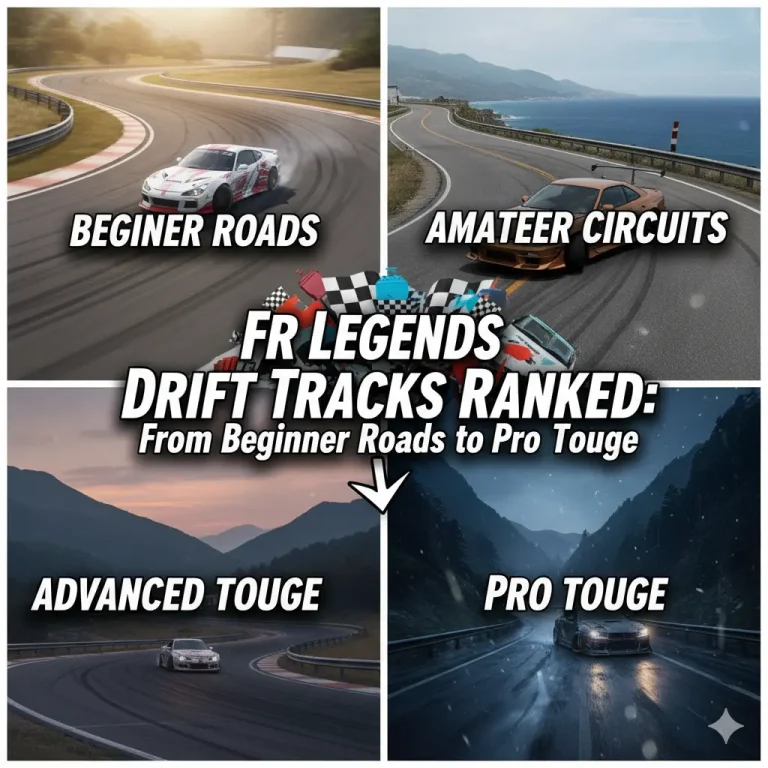
Not every track in FR Legends teaches the same thing. Some layouts build weight transfer sensitivity. Others develop tandem control, scoring consistency, or the fundamentals beginners need before anything else.
Choosing the wrong practice track does not just slow your progress. It can build habits that are difficult to break later. This guide matches each track type to the skill it develops best, so your practice time actually moves you forward. For a full overview of every available layout, the FR Legends Drift Tracks Guide is the right starting point.
| Track | Best For | Skill Level |
| Hakone Turnpike | Weight transfer, precision | Intermediate – Advanced |
| Ebisu-Style Layouts | Tandem practice, drift rhythm | Beginner – Intermediate |
| Gunsai-Style Layouts | Consistency, scoring | Intermediate |
| Beginner Open Layouts | Fundamentals, throttle control | Beginner |
Quick Recommendations
- Best overall practice track: Gunsai-style layouts, consistent structure, suits the widest range of players.
- Best for beginners: Easy open layouts, forgiving runoff, low pressure
- Best for scoring: Gunsai-style layouts repeatable sequences expose score gaps fast
- Best for precision: Hakone elevation and tight corners demand exact inputs
Why Track Choice Matters When Practicing
Every layout in FR Legends rewards a different driving style. A track that helps you develop tandem awareness does almost nothing for your weight transfer control. A track that builds scoring consistency will not prepare you for technical mountain road layouts.
Most players pick a favourite track and stay on it. That works for a while until improvement stalls, and they cannot figure out why. Track selection matters as much as car setup. Matching your practice track to the skill you are actually trying to develop is what breaks through plateaus.
Best Tracks to Practice Drifting in FR Legends
Each track type below focuses on one primary skill. Use them as targeted tools, not just as tracks you happen to enjoy.
Hakone Turnpike
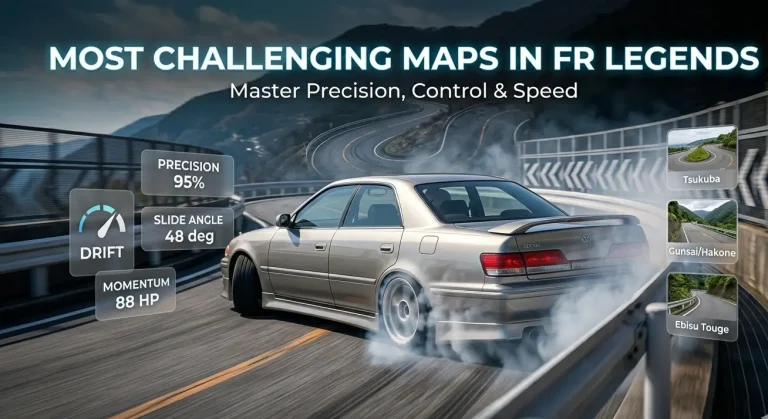
Hakone is the go-to track for developing weight transfer and precision on corner entry. Its elevation changes and technical layout demand that you feel how your car shifts balance mid-corner — a skill no flat track can teach at the same level.
This is not a beginner track. Players who are not yet comfortable linking clean transitions will struggle here and may reinforce bad habits rather than fix them. Use Hakone when your fundamentals are solid, and you want to push precision further. The Hakone Turnpike Guide covers everything specific to that layout.
Best for: Intermediate to advanced players working on weight transfer and corner entry control.
Ebisu-Style Layouts
Ebisu-style tracks are the standard choice for tandem practice. Their wider roads and predictable corner sequences give two cars enough room to run side by side without every minor mistake ending the battle immediately.
Beyond tandem work, these layouts are excellent for developing drift rhythm. The ability to carry a consistent angle and speed through linked corners. If your solo runs feel clean but your tandem driving falls apart, spending sessions on Ebisu-style layouts specifically focused on following another car’s line is the fastest fix. See the Ebisu-style layouts guide for layout-specific detail.
Best for: Players developing tandem awareness and drift rhythm.
Gunsai-Style Layouts
Gunsai-style tracks are built for consistency and score optimization. Their repeatable corner sequences and clean layout design make it straightforward to compare runs directly and identify exactly where points are being lost.
If your technique feels solid but your scores are inconsistent, Gunsai-style layouts are the practice environment that fixes that. The structure rewards players who focus on replicating clean runs rather than trying something different every lap. The Gunsai-style layouts guide goes deeper into how these tracks are structured.
Best for: Intermediate players focused on scoring consistency and repeatable clean runs.
Beginner-Friendly Open Layouts
Open, wide layouts with forgiving runoff zones are where fundamentals get built. The extra space removes the immediate punishment that technical tracks deliver for every small mistake, which gives new players room to actually feel what the car is doing without constantly restarting.
These tracks are not exciting, but they are effective. Throttle control, basic angle awareness, and learning how your car responds to inputs all happen faster in a low-pressure environment. The easiest tracks in the FR Legends page will cover specific options once published.
Best for: Beginners building foundational control before moving to structured layouts.
Best Practice Track for Each Skill
| Skill | Best Track Type |
| Weight transfer | Hakone |
| Tandem driving | Ebisu-style layouts |
| Consistency and scoring | Gunsai-style layouts |
| Beginner fundamentals | Easy open layouts |
| Battle preparation | Battle mode tracks |
How Beginners Should Progress Between Tracks
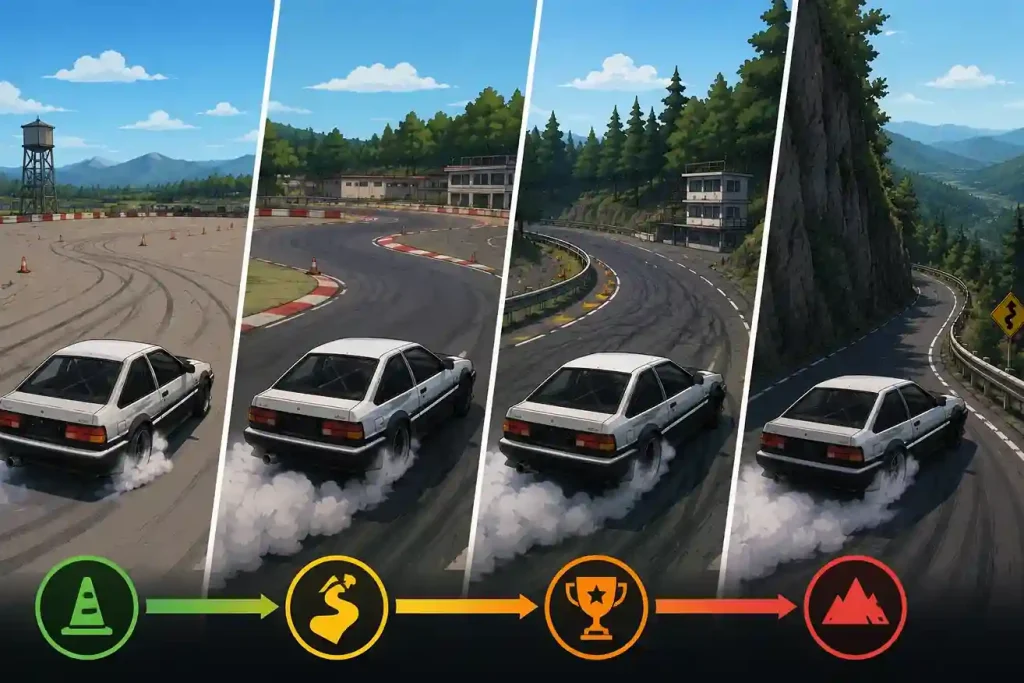
Jumping straight to technical layouts is the most common mistake new players make. A structured progression builds skills in the right order and prevents bad habits from forming early.
Stage 1 Easy open layouts: Build basic throttle control and angle awareness. Get comfortable with how your car responds before adding layout complexity.
Stage 2 Ebisu-style layouts: Develop drift rhythm and learn to link corners. The wider roads still allow mistakes, but the structure starts demanding cleaner transitions.
Stage 3 Gunsai-style layouts: Focus on consistency and scoring. At this stage, the technique is there; these tracks teach you to replicate it reliably.
Stage 4 Hakone: Add weight transfer and precision under pressure. Everything from the previous stages gets stress-tested here.
Skipping stages does not save time. It creates gaps that show up later and are harder to fix.
Common Practice Mistakes
- Practising only one track until it stops being practiced and becomes autopilot
- Switching tracks too often before any single layout has had time to teach its skill
- Using car builds that do not match the track, oversized power on technical touge, or stiff setups on tandem layouts where feel matters more than rigidity.
- Chasing score instead of technique, especially early on when habits are still forming
Pairing the right track with a suitable car setup accelerates improvement significantly. The top drift builds page covers which builds suit different practice goals.
Which Track Should You Start With?
Beginners: Start on easy open layouts. Build control before adding layout complexity.
Intermediate players: Move to Ebisu-style tracks for rhythm, then Gunsai-style for consistency. Both develop different things, and both are needed.
Advanced players: Use Hakone for precision work and return to Gunsai for score sessions. Rotating between the two keeps both skill sets sharp.
Final Thoughts
There is no single best practice track in FR Legends. The right track is the one that addresses the specific skill you are currently missing. Match your layout choice to your skill gap, progress through track types in order, and your improvement will be consistent rather than random.
When you are ready to explore the full picture of what FR Legends tracks offer, the FR Legends Drift Tracks Guide maps out every layout with the context you need to build a smarter rotation.
FAQs
What is the best overall track to practice drifting in FR Legends?
Gunsai-style layouts suit the widest range of players. Their repeatable structure works for scoring practice, consistency drills, and transitioning from beginner to intermediate. Players who want precision work should add Hakone once fundamentals are solid.
What is the best track to practice drifting in FR Legends for beginners?
Wide, open layouts with forgiving runoff zones. They give beginners room to make mistakes, feel the car, and build basic throttle control without getting punished immediately on every error.
Is Hakone good for practice in FR Legends?
Yes, but only for intermediate and advanced players. Its elevation changes and narrow roads make it an excellent tool for weight transfer and precision. Beginners will struggle and may build bad habits before fundamentals are solid.
How often should I switch practice tracks?
Give each track enough sessions to actually teach its skill before moving on. Switching too quickly prevents any single track from doing its job. A rough guideline is to stay until your runs feel consistent, not just occasionally clean.
Do I need a specific car build for practice?
Your build should match the track type. Technical touge layouts suit lighter, more responsive builds. Wide circuit and tandem tracks suit setups that prioritize feel and angle control over raw power.
Can I improve drift scores by changing tracks?
Yes. Scoring consistency improves fastest on Gunsai-style layouts because their repeatable structure lets you isolate exactly where points are being lost. Practising scores on random tracks makes it harder to identify what is actually going wrong.